For years, much of the conversation around artificial intelligence has centered on what models can do. At TRANSFORM 2026 in Houston, the more consequential question was what happens when that intelligence leaves the data center and has to operate in the physical world.
That includes factories where production cannot simply stop for a software update, oil and gas operations hundreds of miles from the people responsible for supporting them, and industrial assets expected to remain in service for decades. It also includes networks where connectivity varies by the minute and environments where security, safety, latency, and reliability are operational requirements.
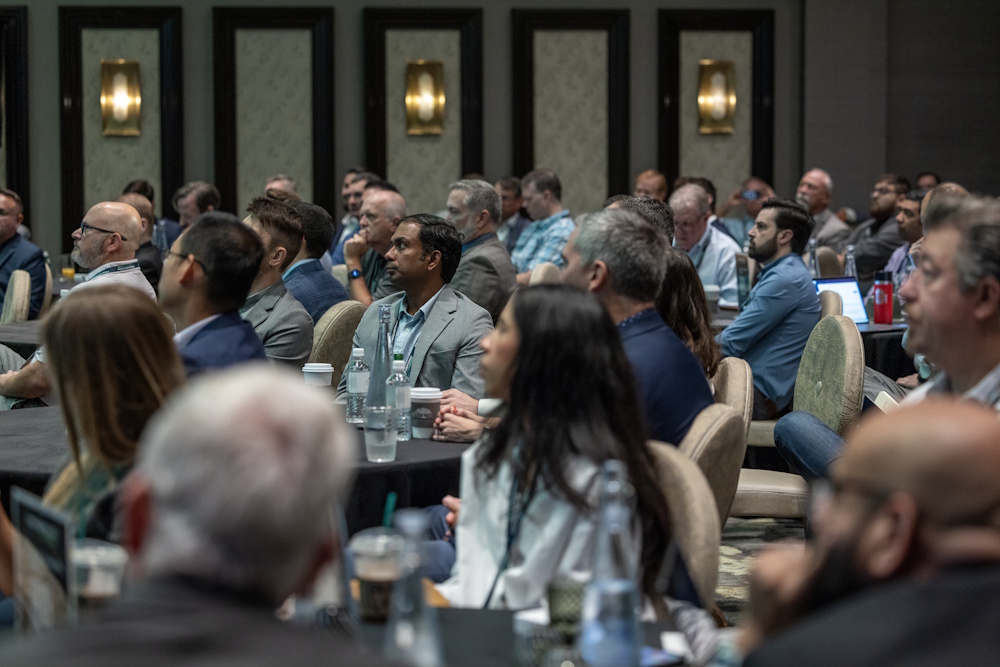
On September 15, ZEDEDA brought together technology leaders, practitioners, and partners across those environments for the first in-person TRANSFORM conference. The day’s sessions included perspectives from Toyota Motor North America, Aspen Technology (an Emerson business), SLB, Intel, HP, Lenovo, and others working across manufacturing, energy, industrial automation, infrastructure, and edge technology.
TRANSFORM began six years ago as a virtual forum for the broader edge community, built around bringing customers, partners, and even competitors together to exchange what they were learning from actual deployments. Our recent conference in Houston reflected how that conversation is evolving as AI adds new capabilities, workloads, and operational demands to distributed infrastructure.
Across the day, a larger picture emerged. AI is moving closer to the equipment, processes, and people that produce business outcomes. As that happens, organizations are discovering that putting intelligence at the edge requires more than moving a model from one computing environment to another. It changes the infrastructure conversation, raises the stakes for IT and OT collaboration, and makes questions about control, security, economics, and operational readiness harder to separate.
AI moving closer to operations
ZEDEDA Founder and CEO Said Ouissal opened TRANSFORM around the event’s central theme: Intelligence at the Edge: Where AI Meets the Physical World.
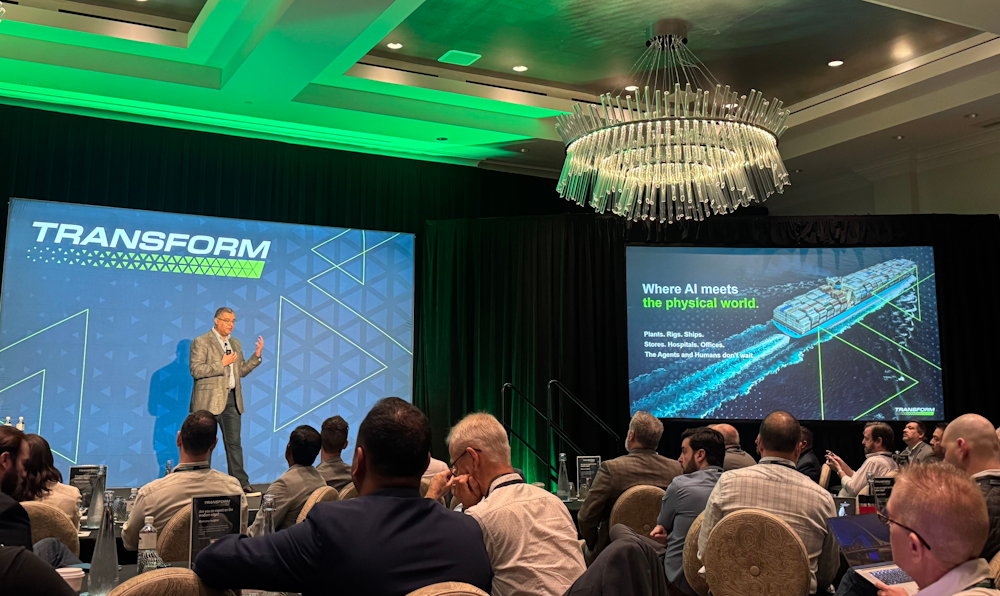
AI workloads are already moving into rigs, ships, retail environments, offices, manufacturing operations, and remote sites where relying continuously on a centralized cloud is impractical or undesirable. At the same time, edge use cases are advancing beyond traditional object detection and computer vision toward systems capable of understanding context, reasoning, and eventually taking action.
A quality system may eventually do more than identify a production anomaly. An intelligent system could combine what it sees with sensor data, equipment history, and operating conditions to determine what changed and recommend, or, in the right circumstances, initiate a response.
The distance between detecting, understanding, and acting is becoming one of the defining issues for edge intelligence.
That does not mean every organization should race toward fully autonomous operations. In many of the environments represented at TRANSFORM, AI-driven decisions must meet an extremely high bar for accuracy, reliability, and safety. A more useful question is what infrastructure, governance, and operational safeguards have to be in place before organizations can safely give AI greater responsibility.
Industrial AI in the industrial environment
Claudio Fayad, CTO of Aspen Technology at Emerson, joined Ouissal to examine how those questions play out in industrial environments.
Industrial environments have been running sophisticated automation for decades. PLCs, DCSs, RTUs, sensors, and control systems were often purpose-built around specific workloads because reliability, performance, and separation were essential. What worked for those requirements, however, can make it difficult to introduce new workloads quickly.
AI arrives in plants that already have an installed technology base, established control architectures, and equipment with very long life cycles. The objective cannot simply be to replace that environment with an IT architecture.
Instead, industrial modernization increasingly depends on software-defined infrastructure that can accommodate traditional applications, real-time control, and accelerated AI workloads together while preserving the reliability, determinism, security, and operational continuity those environments require.
IT/OT convergence emerged repeatedly throughout TRANSFORM because industrial AI depends on the two domains working together without erasing the operational requirements that distinguish them. Convergence does not mean turning OT into IT. OT data, systems, operating priorities, and risk profiles are different. The people who understand those systems need to be part of the strategy from the beginning.
That lesson extended well beyond process automation.
The Toyota Way: Putting people at the center
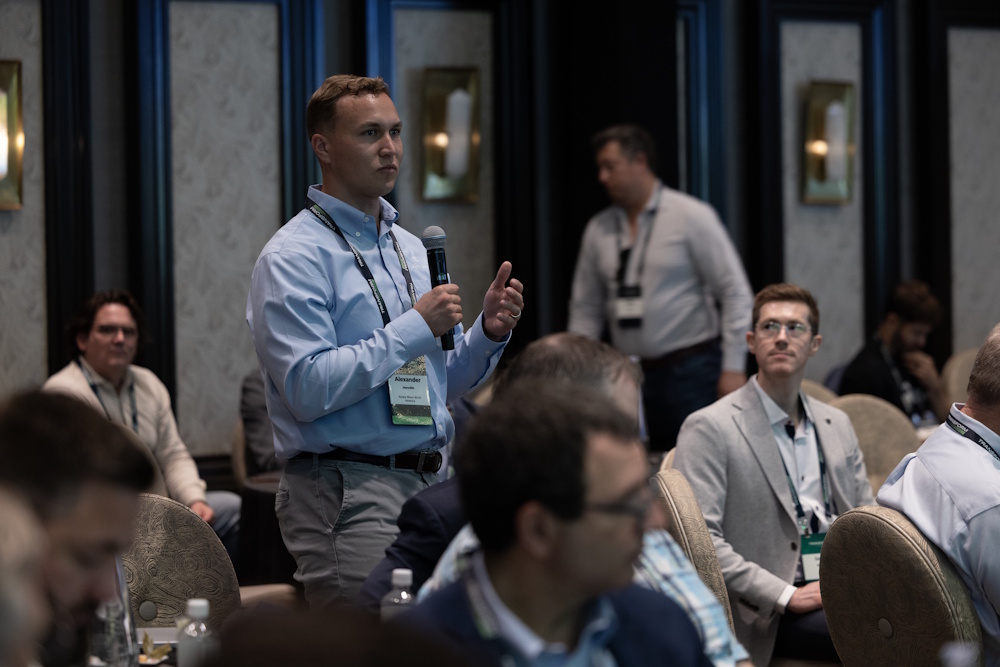
One of the strongest reminders of the day came from Alexander Meredith, Senior Engineer and Product Owner at Toyota Motor North America, in conversation with ZEDEDA SVP and CTO Padraig Stapleton.
Toyota is working across 14 North American factories on edge computing and foundational AI platforms, but its technology decisions are grounded in what is actually happening on the factory floor. Meredith described how the Toyota Way provides a problem-solving framework for that work, including practices such as Genchi Genbutsu, or “go and see,” which brings engineers and technology leaders directly into the environment where a problem occurs. That approach keeps edge and AI initiatives tied to the process being improved, the problem being solved, and the needs of the team members who will use the technology.
Toyota is cultivating digital literacy and enabling plant personnel to develop solutions for their own operating problems. But democratizing technology creates another requirement: the enterprise needs standards, guardrails, and infrastructure that make local innovation manageable at scale.
The tension is familiar to almost every large distributed organization. Standardize too aggressively and local teams cannot solve problems quickly enough. Allow every site to develop its own architecture and the result becomes difficult to support, secure, and govern.
Toyota’s approach suggests another path: establish a strong common foundation while preserving room for people closest to the process to improve it. Edge intelligence is inherently distributed. Its infrastructure has to accommodate that distribution without turning every site into a technology island.
Infrastructure for the next phase of edge AI
Across the sessions, the need for a common foundation came into sharper focus as speakers examined the infrastructure required to run, manage, and scale increasingly capable AI workloads at the edge.
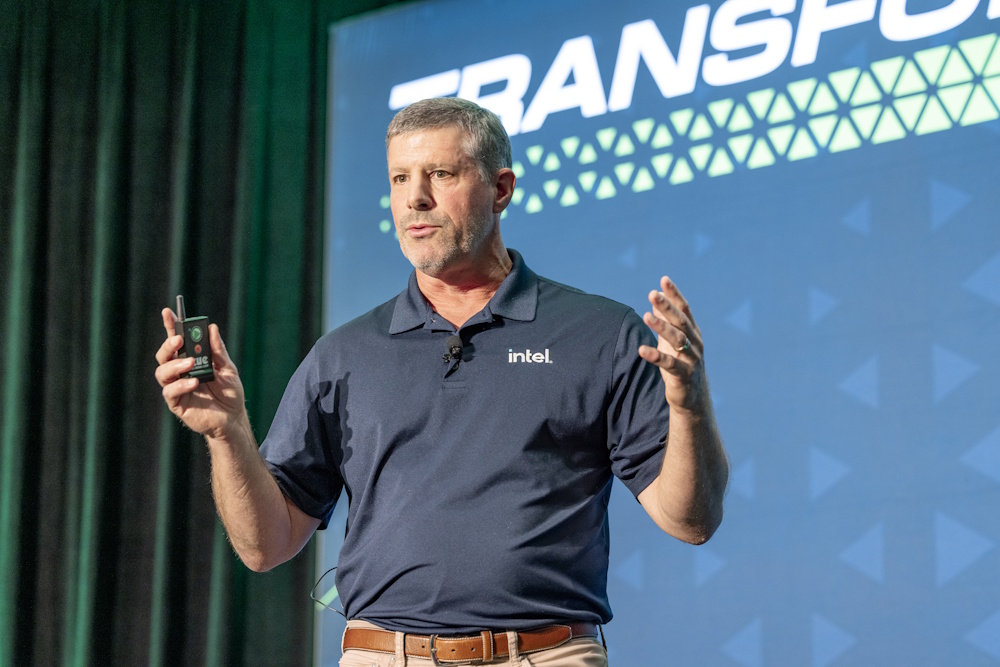
HP explored what happens as industrial AI moves from detecting conditions to helping reason about and respond to them. Intel addressed the compute and software foundation needed to support industrial AI and software-defined automation. Lenovo focused on the broader collection of hardware, software, security, management, and services required when computing moves beyond the data center. Quvia and Celona examined how applications and data move between edge and cloud across networks that may include fiber, cellular, satellite, and other links.
SLB brought the problem into the realities of energy operations. Garud B. Sridhar, Head of Product for Agora Edge AI at SLB, described an industry that already has decades of operational knowledge, models, data, and automation. The opportunity for edge AI is therefore not simply to introduce more intelligence. It is to operationalize that intelligence faster, closer to the process, and in ways that make the people responsible for production more effective.
That creates a practical infrastructure challenge because AI evolves much faster than industrial systems do. A model can change dramatically in months, while equipment deployed into an oil field, mine, factory, or remote site may remain in place for years. Organizations cannot continually replace their operational infrastructure simply because the next generation of AI requires something different. Infrastructure must be able to support new workloads, hardware accelerators, and models without repeated rip-and-replace cycles.
The same is true for brownfield integration. Many of the world’s most valuable industrial environments contain equipment from multiple vendors and technology generations. Successful edge AI strategies must meet this reality rather than assume a clean-sheet environment.
Cost and control at the edge
Another theme surfaced early in Houston and continued throughout the day: the economics of AI are changing. As organizations increase AI usage, compute demand, model consumption, and infrastructure requirements rise with it. Agentic systems can intensify that demand because they interact with models continuously rather than through the occasional prompt-and-response pattern most people associate with generative AI.
At the edge, that raises practical questions about where inference should run, which models are appropriate for a given workload, and how much intelligence actually needs to travel back to the cloud.
For enterprises, local AI can provide advantages that extend beyond latency. Running appropriate workloads on-premises or at the edge can give organizations greater control over operational data, model access, and infrastructure costs. It can also become increasingly important as companies train or post-train models on proprietary information.
A model tuned on an organization’s processes, operating knowledge, and data begins to embody intellectual property of its own. Protecting that model, controlling where it runs, and maintaining visibility across a distributed fleet therefore become extensions of the organization’s data and cybersecurity strategy. Ouissal framed the issue in Houston around the importance of enterprises being able to “own your intelligence” across infrastructure, data, models, and the outcomes they produce.
That is a different conversation from the first wave of enterprise AI adoption. The question is moving beyond “Which model should we use?” toward “What part of our intelligence stack do we need to control?” and how an ecosystem of providers can support that control across the edge.
A real deployment can involve silicon, industrial hardware, operating systems, AI accelerators, connectivity, orchestration, cybersecurity, applications, models, and cloud services, all while interfacing with equipment that may have been installed long before many of those technologies existed. Building and operating that environment therefore requires cooperation across multiple layers of the technology stack.
Speakers repeatedly returned to interoperability, open architectures, common infrastructure, and the importance of avoiding another generation of tightly coupled systems. Enterprises need the freedom to choose the right model, accelerator, hardware, and application for a given environment while managing them through a consistent operational foundation that can accommodate different technologies and change over time.
Reflecting a changing edge conversation
Organizations are no longer asking only whether they can connect remote assets or run applications outside a centralized data center. Computer vision and predictive maintenance are already established use cases in many industries. AI models are entering production. Enterprises are experimenting with agents, local models, and increasingly autonomous workflows.
The harder questions now begin after deployment: How do you manage thousands of distributed workloads? How do you update them without sending someone to every location? How should AI interact with deterministic control systems? Which decisions can become autonomous and which should remain human-directed? How do you secure models that now contain valuable enterprise knowledge? How do you support equipment that operates on a very different lifecycle from the software running on it? And how do you give people at the edge more capability without sacrificing enterprise governance?
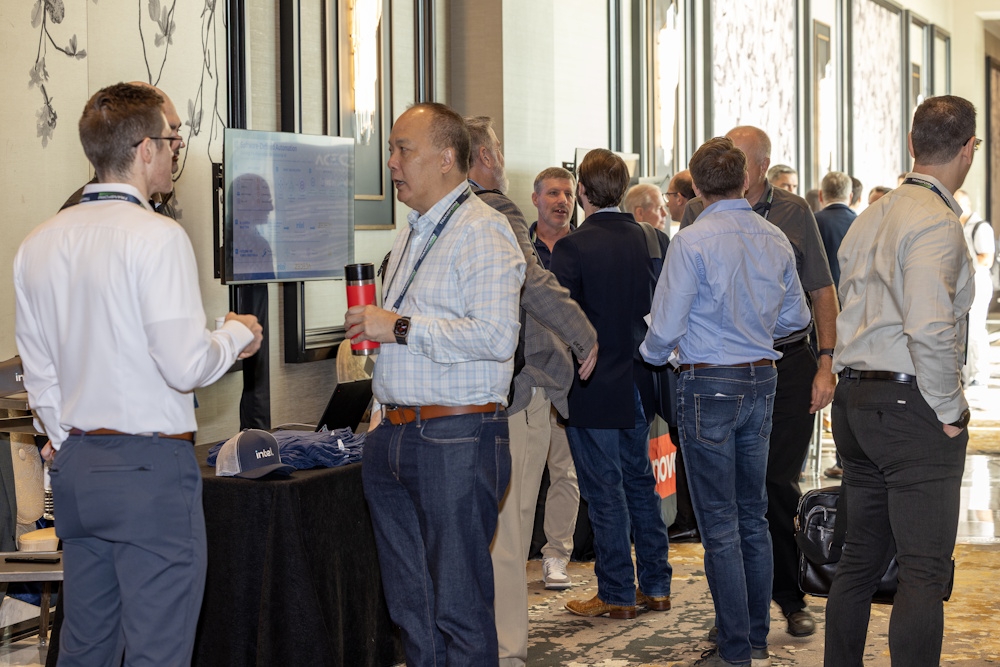
Those are the questions that made TRANSFORM Houston valuable. They are also why the event was never intended to be only a ZEDEDA conversation. In Houston, manufacturing leaders learned alongside energy companies, infrastructure providers heard directly from operators, and practitioners compared challenges that often look surprisingly similar across industries.
Watch all of the sessions from ZEDEDA TRANSFORM Houston
TRANSFORM to continue in Frankfurt
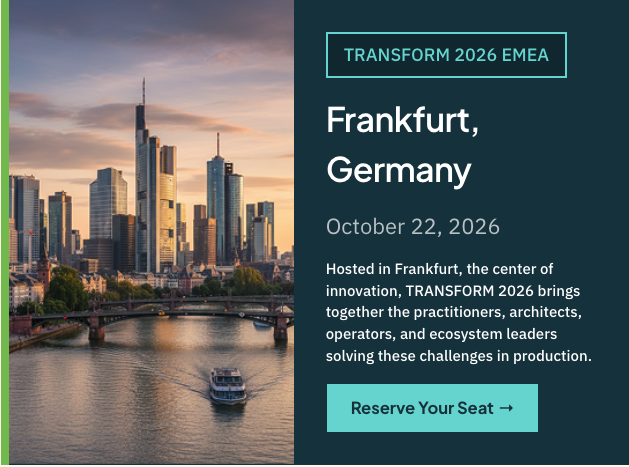
The next TRANSFORM 2026 event takes place October 22 at the Sofitel Frankfurt Opera Hotel in Frankfurt, Germany, where the discussion on the operational realities of edge intelligence will continue, through a distinctly European perspective.
The program will bring together leaders from Volkswagen, Maersk, T-Systems, STL Partners, HP, SLB, Speedcast, Cybus, and others to examine topics including security, privacy, sovereignty, edge AI adoption, intellectual-property protection, physical AI, and scaling distributed AI in real-world operations.
Reserve your seat to join the edge intelligence community in Frankfurt, Germany.