Devices powered by Ambarella silicon can now be deployed, updated and monitored across an entire estate from a single place, turning on site video intelligence from a single site pilot into something an organization can run everywhere.
Today we were excited to announce support for edge AI devices powered by Ambarella silicon across ZEDEDA Edge Intelligence Platform and ZEDEDA Edge Kubernetes Service. Together they give organizations a practical way to run artificial intelligence inside their own buildings, and to look after it across every location without sending anyone to site.
Intelligence for the cameras you already own
Most organizations do not have a camera problem. They already have cameras, often hundreds of them, recording continuously and watched by almost nobody. What they lack is a way to turn that footage into answers.
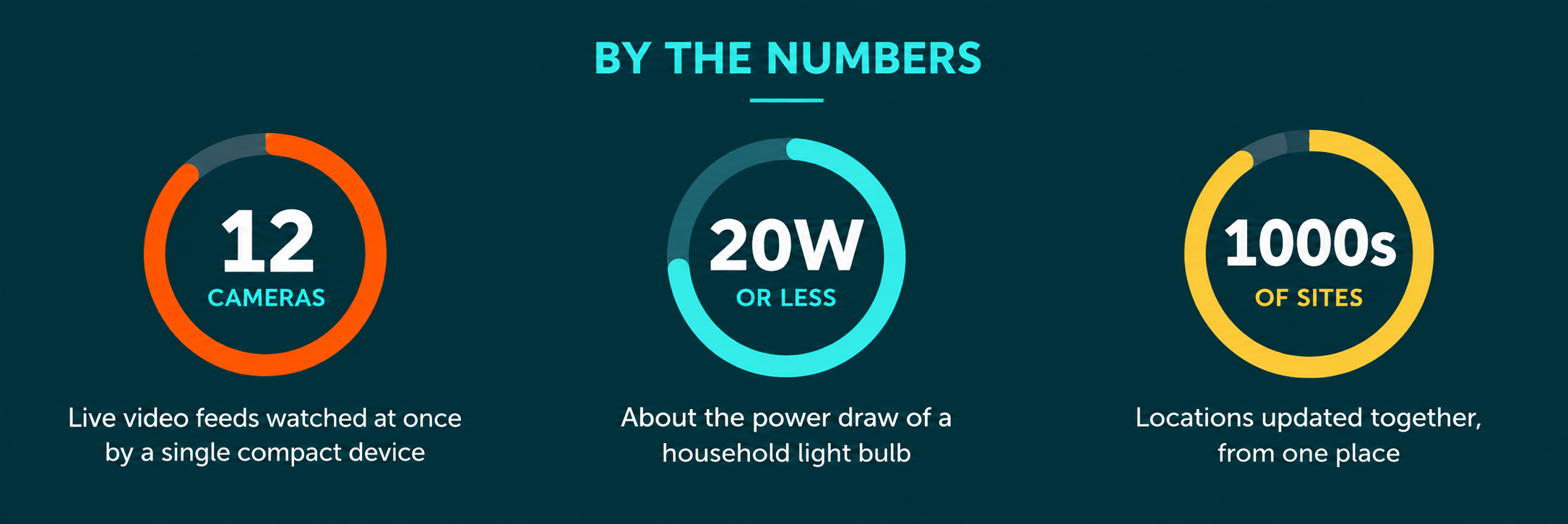
Ambarella designed its N1 family of edge AI processors for exactly this job. A single compact device takes in up to twelve live high definition camera feeds and analyzes all of them at once, running several kinds of AI side by side, in under twenty watts. It sits in the stockroom or the plant room next to the existing recorder. The cameras do not need replacing. The building does not need rewiring.
That device answers questions the footage always contained but nobody had time to extract. How long is the checkout queue right now? Is anyone standing in the loading bay where the forklifts run? Did that shelf empty two hours ago? Is somebody in the substation who should not be?
Crucially, it answers them on the premises. The video is analyzed in the room where it was filmed. Only the answer travels onward, never the footage. For anyone responsible for customer privacy, staff consent or regulatory exposure, that single fact changes the entire conversation.
One device is easy, ten thousand are not
Putting one of these devices in one building is a good afternoon’s work. The difficulty arrives on the second hundred.
An organization that wants this capability does not want it in only one location. It wants it in every store, every depot, every substation. Those buildings sit on different networks, behind different routers, with no technical staff and no appetite for a visit from head office. Some are closed overnight. Some lose connectivity for days.
And the AI itself does not stand still. It improves. A better model arrives every few weeks or months, and the value of having it is only realized when it reaches all of the estate, not the fifteen sites somebody had time to drive to.
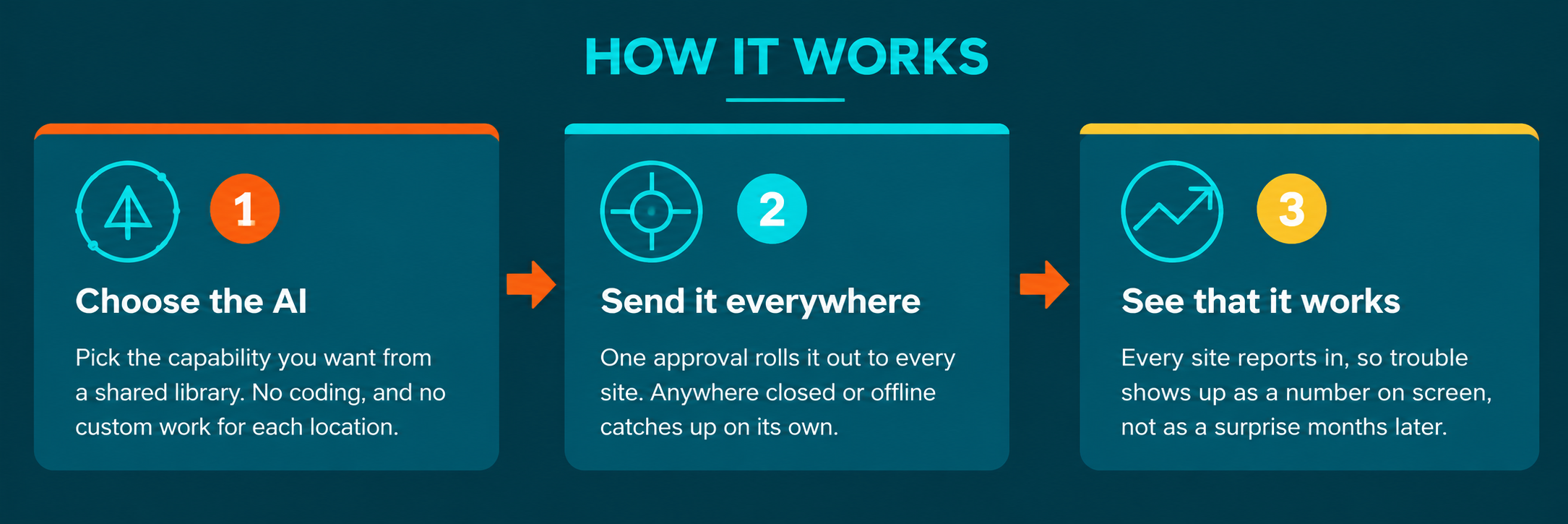
In other words, the questions that decide whether a project succeeds are rarely about the silicon. Instead they are questions like: How does a new capability reach ten thousand buildings? How do I know it arrived? How do I know the device is still doing its job today, and has not quietly stopped? And when a change turns out to be wrong, how do I roll it back everywhere before Monday?
How ZEDEDA closes the gap
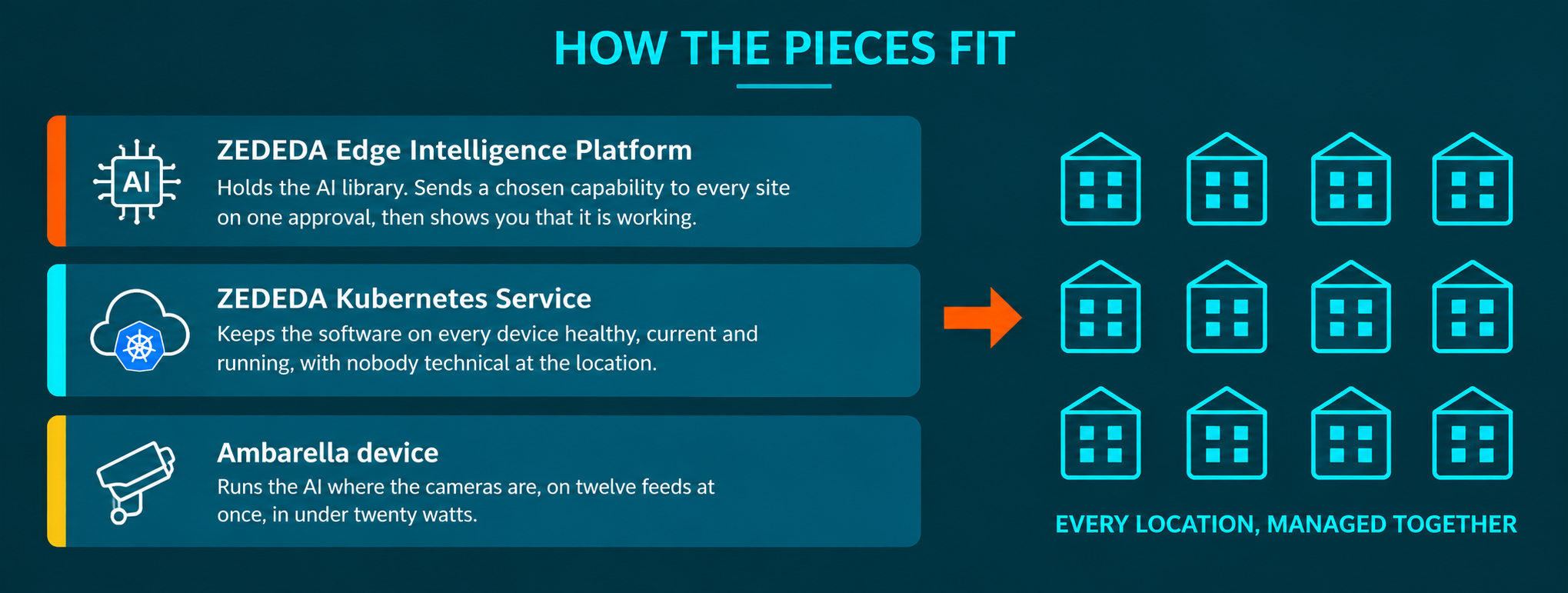
ZEDEDA answers those four questions with two products that work together. One looks after the device. The other looks after the intelligence running on it.
ZEDEDA Edge Kubernetes Service keeps the devices alive
Every device is given a managed software foundation that ZEDEDA sets up and looks after remotely. It installs itself, repairs itself when something stops, accepts updates without a site visit, and reports its condition back to the head office.
This is the part organizations consistently underestimate. A device in a stockroom doesn’t have a technician standing next to it. Anything that requires someone to physically attend to it is a cost that multiplies by the number of buildings, which is precisely the number you were trying to grow. ZEDEDA Edge Kubernetes Service removes that multiplication. The site needs power and a network connection, nothing more.
Sites reach out to ZEDEDA rather than the other way around, so no location needs a fixed public address, an opened firewall port or its own private network link. For most organizations this is the difference between a rollout their network team approves and one that stalls in review.
ZEDEDA Edge Intelligence Platform keeps the AI current
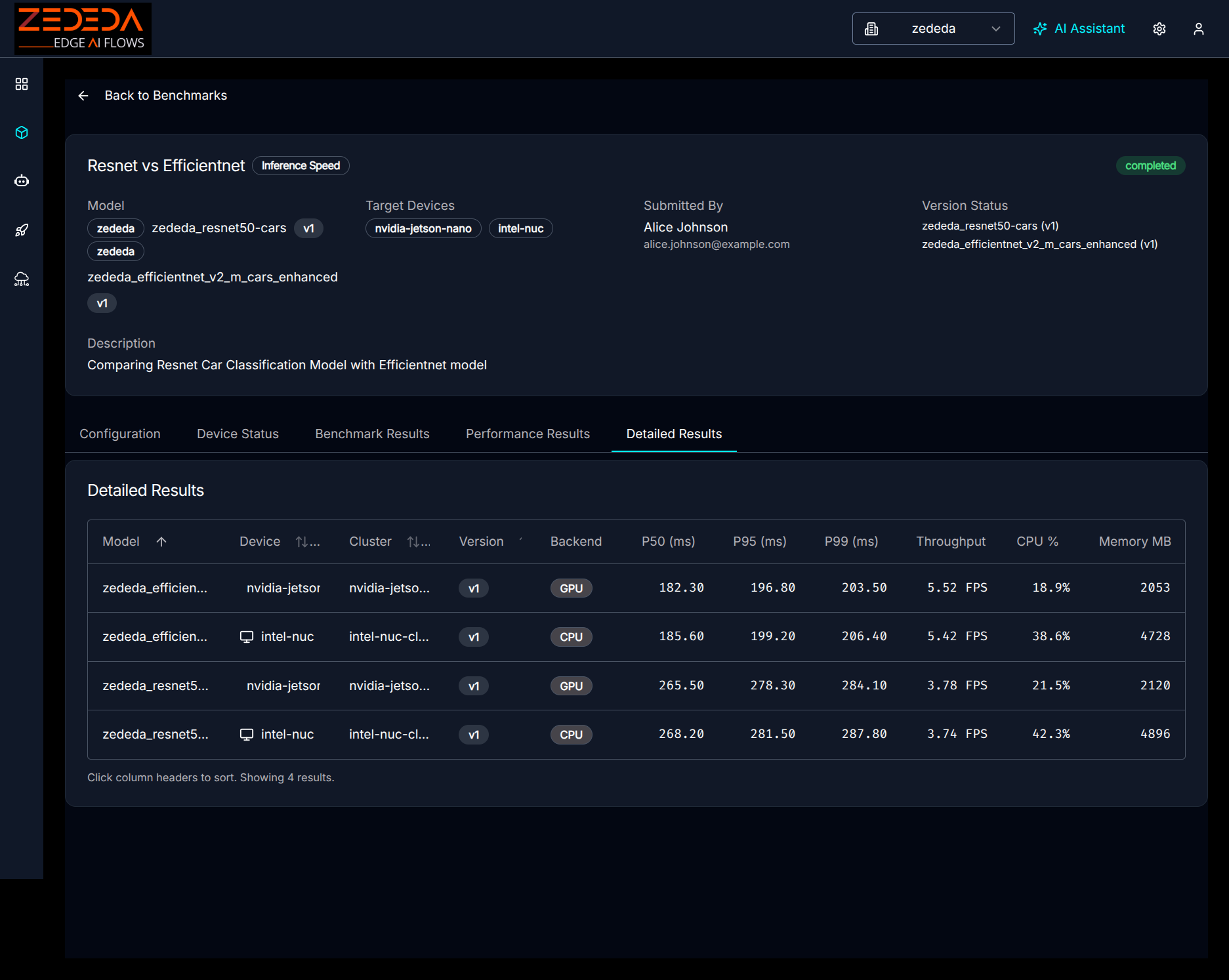
On top of that foundation sits the intelligence itself. Ambarella publishes capabilities into a shared library. Somebody chooses one, chooses which sites should receive it, and approves the change once. Every targeted location then moves to that state on its own. Sites that were closed or disconnected collect the change when they return, without anyone chasing them.
From then on each location reports on its own condition, so the platform can distinguish a device that is quiet because the building is shut from one that is quiet because it has stopped working. That difference sounds small on one device. Across ten thousand devices, it is the difference between a dashboard people trust and one they learn to ignore.
If a change turns out to be wrong, it is withdrawn the same way it was sent. One decision, applied everywhere, with a record of who made it.
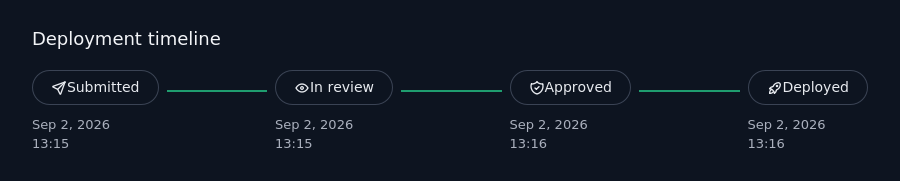
One approval, on the record. A change moves from submission through review and sign-off to deployment across the estate, with every step timestamped.
What customers get
- Privacy by design. Footage is analyzed on the premises. Only the answer travels, never the video, which makes conversations with privacy officers and regulators considerably shorter.
- Lower running costs. No continuous upload of camera feeds, and a device that draws about as much power as a light bulb.
- No technical staff on site. Devices install, repair and update themselves under remote management, so growing to more locations does not mean growing a field team.
- One change, everywhere. An improvement is approved once and reaches the whole estate. Sites that are closed or offline collect it when they reopen.
- Confidence that it is working. Every location reports on its own health, so a device that has quietly stopped doing its job shows up immediately, rather than at the next site visit.
- An easy way back. If a change turns out to be wrong, it can be withdrawn across every location the same way it was sent.
- Room to grow. Sites running different hardware from different manufacturers are managed side by side, so nobody has to replace equipment that already works.
Beyond the shop floor
The same pattern applies wherever Ambarella silicon already goes to work.
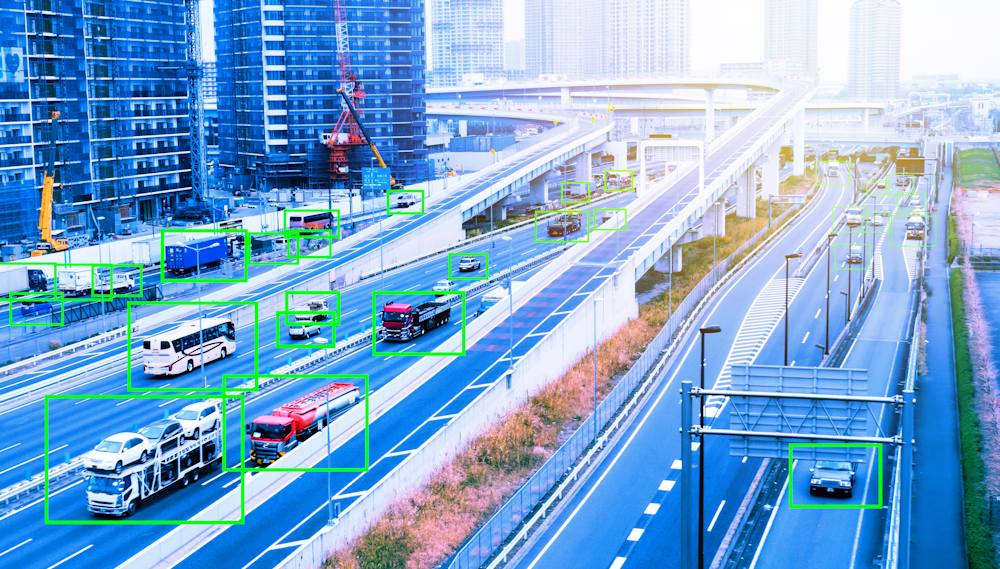
In warehouses and factories, mobile robots and industrial equipment use it to understand their surroundings, and the fleet is updated as one. In towns and cities, video recorders analyze traffic and public spaces without shipping footage to a data center. In energy and transportation, unattended sites in difficult places need to be as manageable as a site down the road.
All of them share the same functionality: Capable hardware in a lot of places, nobody on site, and intelligence that keeps improving.
Looking ahead
Ambarella-powered devices can run vision-language models on the device itself: models that take in video and answer in plain language, rather than only labelling objects with a box and a class. That opens an appealing pattern: a lightweight capability watching every camera continuously, and a far more capable one called in only when something actually happens.
Instead of an alert that says a person was detected in aisle seven, the system can describe what took place. And it can do so without a single frame leaving the building.

Availability
Support for Ambarella-powered devices is available now across ZEDEDA Edge Intelligence Platform and ZEDEDA Edge Kubernetes Service.